Data modeling drives Texas A&M war on cattle ticks
Precision tick location tech boosts effort to protect U.S. beef supply
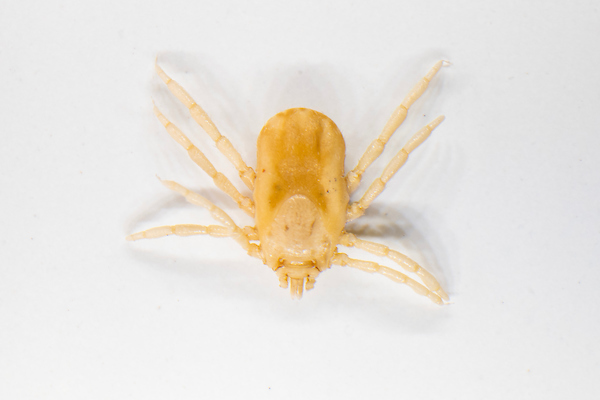
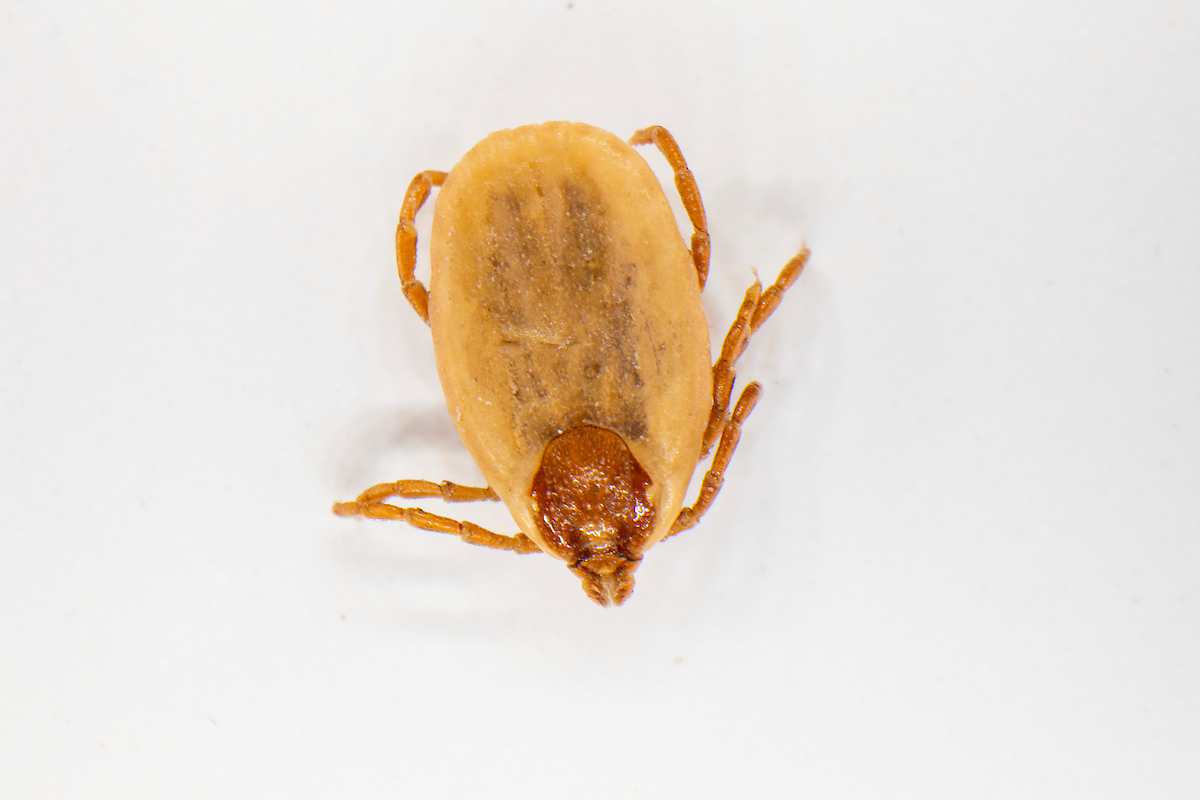
Texas A&M AgriLife scientists have uncovered new insights into how cattle fever ticks survive and spread across South Texas, revealing hidden refuges that could explain why the pest remains one of the U.S. cattle industry’s greatest threats.
In two recently published studies, the research team pairs mapping cattle movement with advanced computer modeling, offering first-of-its-kind “location intelligence” tools.
This new tool guides ongoing cattle fever tick eradication strategies in South Texas. It represents an innovative approach to protecting U.S. cattle from bovine babesiosis, a deadly disease transmitted by the tick.
These studies are an important scientific step to protect the nation’s food supply.
Texas A&M AgriLife Research project investigators include the Department of Entomology’s Taylor Donaldson, Ph.D., associate research scientist, and Pete Teel, Ph.D., Regents Professor. Also on the team is the Department of Ecology and Conservation Biology’s Rose Wang, Ph.D., senior research scientist, and William Grant, Ph.D., professor.
The research was funded via by the U.S. Department of Agriculture National Institute of Food and Agriculture and supported by experts within the USDA-Agricultural Research Service and Texas Animal Health Commission.
“Wildlife pose a special challenge when monitoring and eliminating cattle fever ticks in livestock herds, because they can cross fences and sustain cattle fever tick populations in areas fenced cattle don’t go,” Teel said. “This is the first time we’ve used animal tracking data and modeling to assess eradication efficiency across a broad range of factors.”
Modeling cattle movement and spread of ticks
Cattle fever ticks spread bovine babesiosis, a deadly disease that once devastated herds across the southern U.S. Starting in 1906, the federal Cattle Fever Tick Eradication Program nearly eliminated the pest from the country, but infestations still flare up in South Texas – particularly where wildlife like white-tailed deer and nilgai antelope carry ticks across fences and quarantine zones.
Eradication strategies rely upon acaracide-treated cattle as trap hosts to remove ticks from infested pastures, thus their efficiency in covering all areas of pastures is directly related to eradication success.
The new studies, both published in the October issue of Current Research in Parasitology and Vector Borne Diseases, capture how ticks persist in those environments.
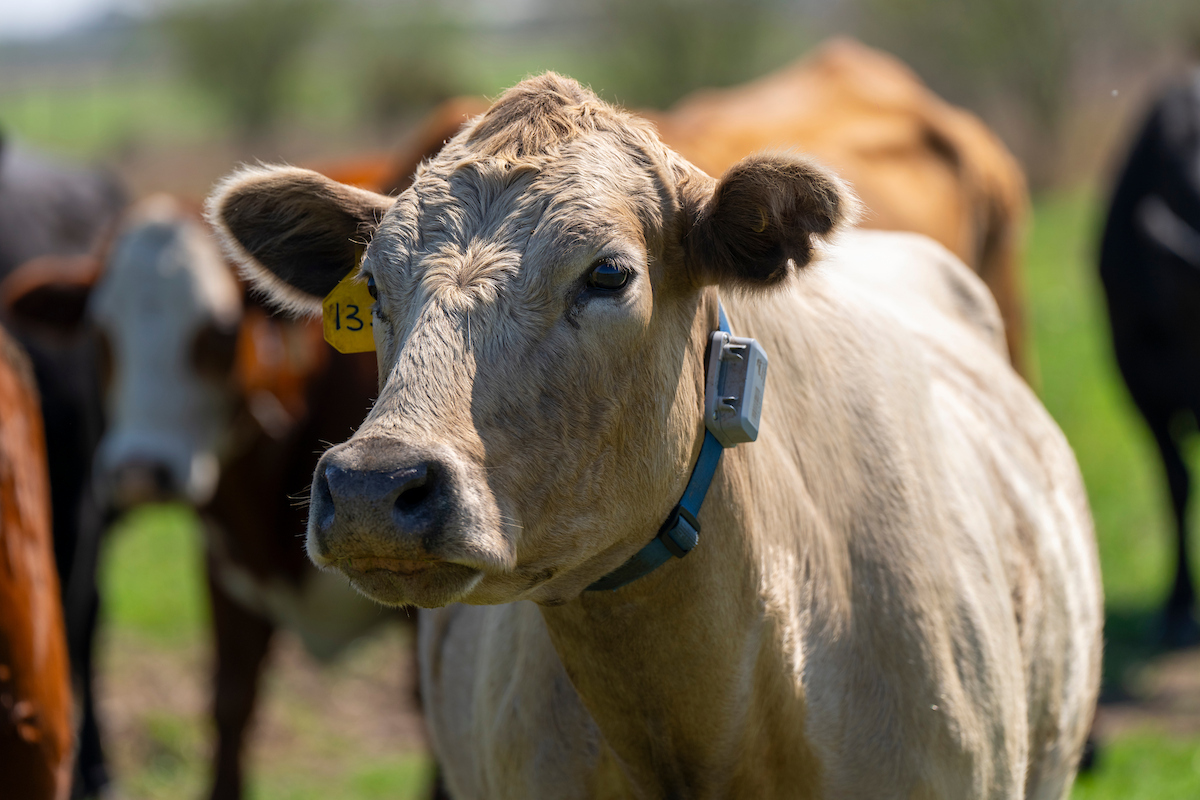
In the first study, “Location intelligence unveils seasonal spatiotemporal pattern shifts of habitat use and selection by cattle across a South Texas coastal landscape infested with Rhipicephalus microplus,” researchers tracked cattle with global positioning, GPS, collars on the Laguna Atascosa National Wildlife Refuge to map how they moved across the landscape.
“We were able to collect and analyze hourly location data from GPS-collared cattle to measure their habitat use and analyze how grazing behavior and pasture coverage changed with seasonal changes in heat stress,” Teel said. “That gave us insight into behaviors and patterns in what we recognize is the intersection of cattle grazing science and the entomological science of ticks and their hosts.”
Location intelligence leads to new insights
In the second study, “Leveraging location intelligence and individual-based modeling to simulate Rhipicephalus microplus infestation and eradication dynamics at the cattle-wildlife interface,” they combined the real-world data into computer models that simulated how ticks survive, are spread by hosts, and might be eliminated under different conditions. The work allowed researchers to validate models never before tested against such detailed field-collected information.
The “location intelligence” approach revealed how climate, habitat and host behavior interactions might shape tick survival and spread. Teel said the studies together reveal hidden pockets of habitat where cattle seldom go but where wildlife can sustain tick populations, and methods to test new tactics to improve grazing coverage.
“We technically call these pockets ‘refugia’ for ticks,” he said. “One of the outcomes of this work is looking at how we can get treated cattle into those areas to support our eradication efforts.”
Smarter surveillance against century-old challenge
By linking cattle movement, habitat features and climatic conditions with predictive modeling, researchers are equipping regulatory agencies like the Texas Animal Health Commission and USDA-Animal and Plant Health Inspection Service with science-based tools to better design ranch-specific eradication plans.
“While the challenges with cattle fever tick remain complex, the mission is simple,” Teel said. “Eradication requires eliminating every tick.”
Beyond cattle and ticks, the work demonstrates the promise of “location intelligence”—combining GPS tracking, geographic information system, GIS, mapping, drone imagery and other advanced technologies to understand how landscapes influence disease vectors.
Future advances, including miniaturized ear-tag trackers and real-time data sharing, could allow agencies and ranchers the ability to monitor treated cattle and adjust strategies as infestations unfold with shifts in climate and wildlife movement.
Teel said these two studies highlight Texas A&M AgriLife’s central support role in the century-old fight to safeguard the Texas and U.S. cattle industry against emerging threats and other invasive pests. By uniting fieldwork, innovative technology and modeling, the research opens doors to more precise surveillance and smarter eradication methods to keep cattle fever ticks – and the diseases they carry – in check.
“Bovine babesiosis would be devastating to cattle ranchers,” Donaldson said. “We eliminate the threat by eliminating the only thing that transmits the disease – the ticks. These studies represent an important next step in that mission as we look to protect the nation’s food supply.”