
FarmHope expands mental health care and education to ag industry
AgriLife Extension, Texas A&M Health initiative helps farmers and ranchers confront stigma, access barriers and stress
Free counseling and stress management support are available to Texas agricultural producers and their families through FarmHope, a collaborative effort of the Texas A&M AgriLife Extension Service and the Texas A&M Health Telehealth Institute.
Farmers and ranchers face some of the highest rates of anxiety, depression, substance use and suicide in the nation. Yet many rural residents struggle to access care due to distance from providers, workforce shortages, limited available services and persistent stigma.
Much of the stress comes from uncertainty about things out of their control, such as the weather and negative changes in market conditions. And, for families with generational farms and ranches, there’s a pressure to continue that legacy.
Recognizing and addressing a need
To bridge that gap, Miquela Smith, AgriLife Extension health program specialist in the Disaster Assessment and Recovery unit, Lubbock, and Tiffany Lashmet, J.D., AgriLife Extension agricultural law specialist and professor, Department of Agricultural Economics, Amarillo, and Carly McCord, Ph.D., Texas A&M Telehealth Institute director and Naresh K. Vashisht College of Medicine clinical associate professor, Bryan-College Station, created FarmHope.
Free counseling for producers
FarmHope offers no-cost telehealth counseling for Texas farmers, rancher and agricultural workers. Services are private, east to access, and delivered by clinicians who understand the realities of agricultural stress. If you or someone you know needs support, help is available.
FarmHope merges farm and ranch estate planning education with free, high-quality telehealth counseling delivered by licensed clinicians who understand the stressors of agriculture. Services are no-cost and available to any ag producer, ag worker or family member living in Texas – no insurance or referrals required.
“We are not just addressing this because it has been labeled as a crisis in rural America; it’s more than that,” Lashmet said. “We know people who have struggled. We’ve seen the outcomes of when people get help, and when they don’t.”
Texas consistently ranks among the lowest states in mental health care access, despite it being one of the nation’s top agricultural producers and farming and ranching being a notably high-stress occupation.
“Farming and ranching come with more stress than most people ever see,” McCord said. “In our rural communities, that stress gets magnified by long distances, few providers, and the stigma that keeps too many people just stay silent. That’s why this has become a real mental health crisis — and why telehealth and FarmHope matter so much. We’re bringing care to people where they are, in ways that actually work for them.”
Driving the stress on the farm and ranch
According to the Rural Health Information Hub, in any given year, one in four adults residing in rural areas face mental health concerns, many due to stresses caused by the financial complexity of the agriculture industry, economic pressure and uncertainty, generational legacy and family dynamics, and fear of farm loss.
“So many of the factors affecting their lives and livelihoods are beyond their control,” Lashmet said. “That uncertainty can take a tremendous toll on their mental health.”
Developing the FarmHope outreach program
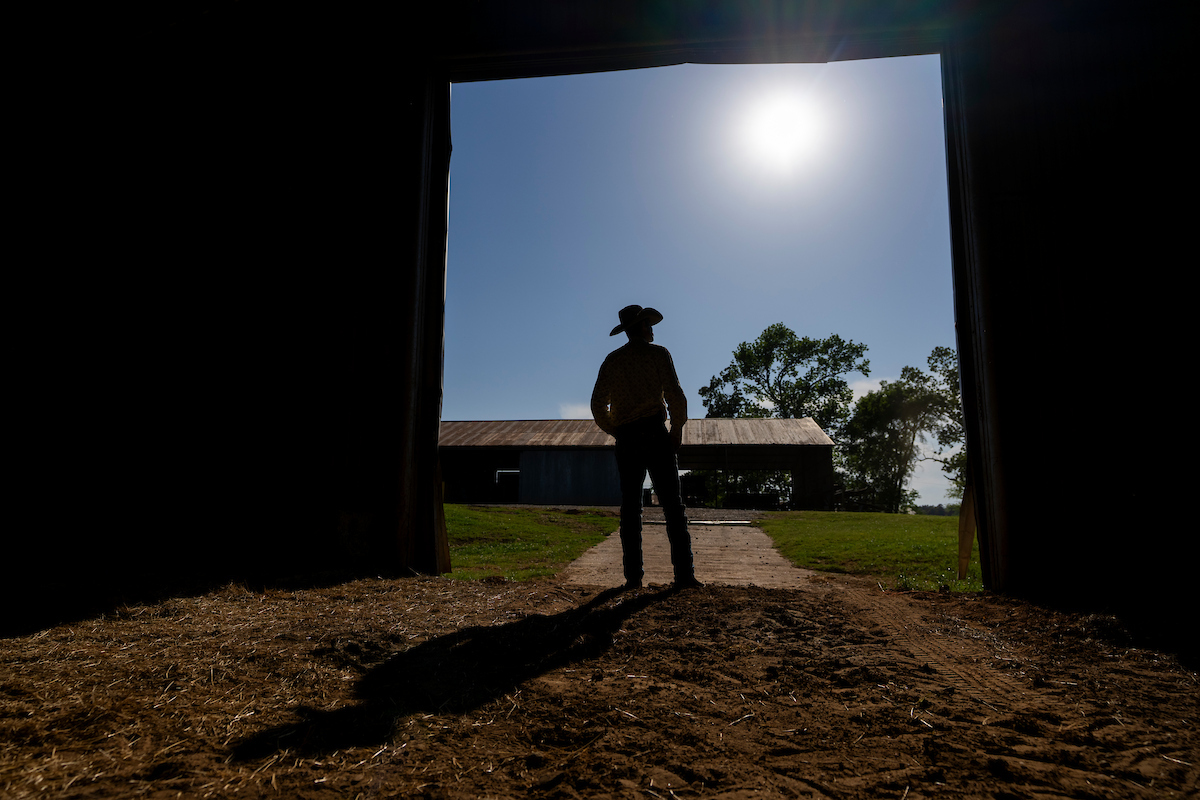
The urgency of the work became even clearer to Smith and Lashmet after they captured the story of Grant Heinrich of Slaton, who bravely spoke about facing multiple points of suicidal crisis. His story reflects the realities many producers experience and underscores why initiatives like FarmHope matter.
The FarmHope program is a continued push to raise awareness, provide education through farm and ranch succession planning training, and offer mental health outreach and resources for rural Texas ag producers.
Isolation, access to and cost of professional treatment and the stigma associated with asking for help have been barriers to those in agricultural and rural communities seeking the mental health care they need, Smith said.
“We realized the importance of not only encouraging these individuals who are struggling to get help but providing them with easy and free access to that help,” she said.
Smith, Lashmet and McCord piloted a program to address the stress that agriculture workers face and related mental health concerns such as anxiety, depression and substance use.
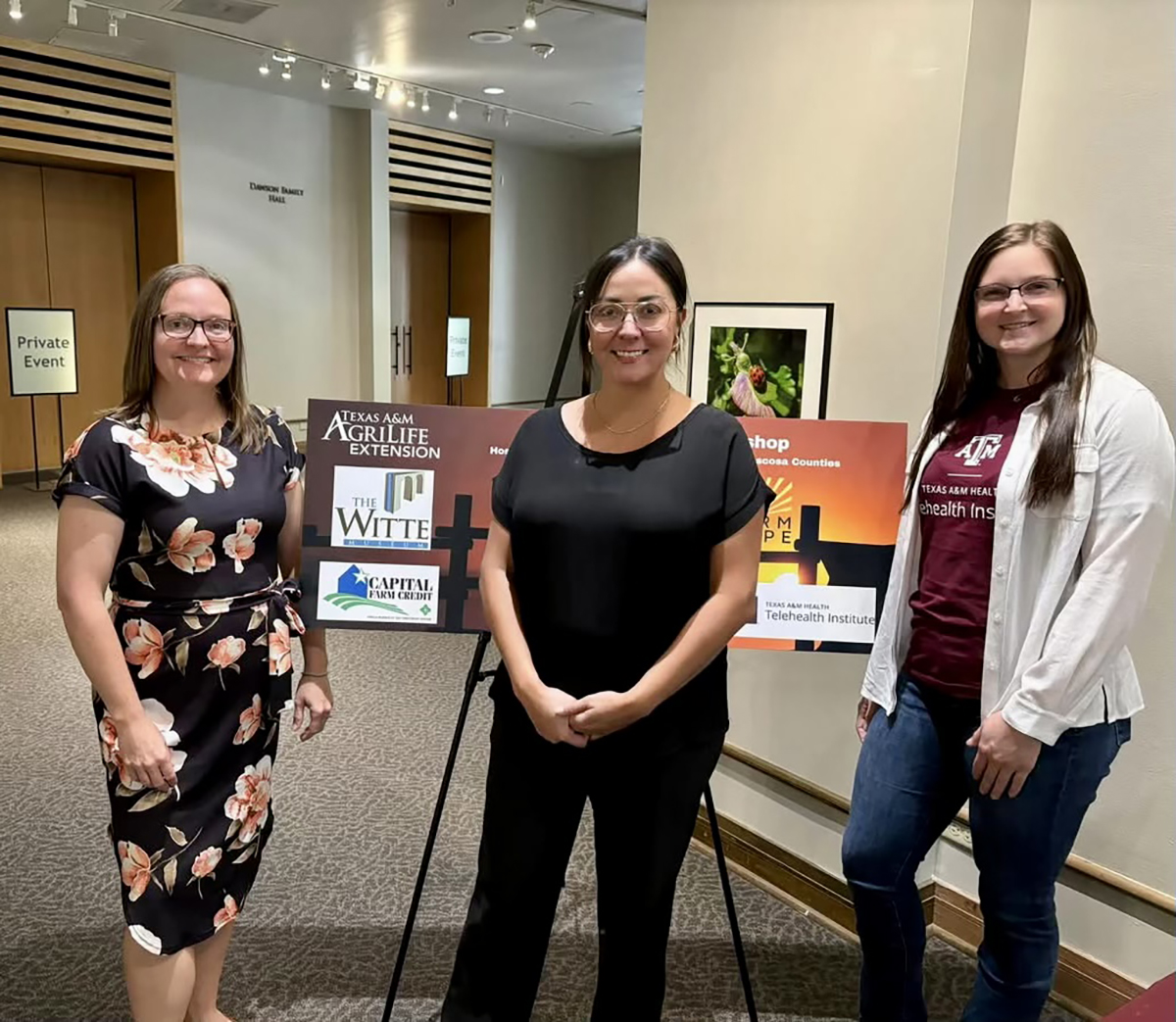
Mikaela Spooner, Ph.D., psychologist and clinician at the Texas A&M Telehealth Institute, provides telehealth counseling and joined the efforts to host three farm and ranch succession planning and mental health training events that reached over 100 individuals.
How to access free counseling
Texas ag producers, farm workers, and their family members can receive free, confidential counseling from a clinician who understands the unique stressors of agriculture. No insurance or provider referrals are required, and it is all private from the home.
The service is available through http://u.tamu.edu/tbcservices or by calling the Texas A&M Telehealth Institute at 979-436-0700.
Future workshops
During the FarmHope workshops, attendees hear about agricultural estate planning basics from Lashmet, and farm and ranch stress and FarmHope services from Smith and Spooner. Future workshops are scheduled for Jan. 12 in Lubbock, sponsored by the National Agricultural Law Center, and a date in April is still being finalized in the Robstown area.



